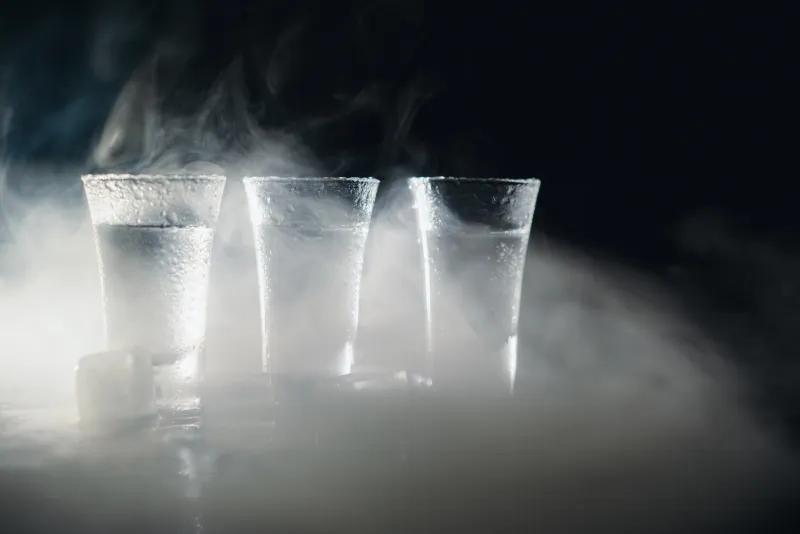
Bringing the Grand Hotel Bar Home: A Craft Vodka Guide for the Serious Home Bartender
Spend an evening at the bar of a serious American hotel—the Gage in Chicago, the Ace in New York, the Post Ranch in Big Sur—and you will notice something that distinguishes the experience from even a well-stocked home bar. It is not, as one might assume, the equipment or the ice program or the elaborately garnished presentation, though all of those elements play a role. It is the considered intentionality behind every selection. The bartender behind that counter has made dozens of small decisions before you arrived, and the vodka on the back shelf is not there by accident.
Recreating that standard at home is an achievable ambition. But it requires understanding why professionals make the choices they do—and then applying that logic to your own collection.
The Psychology of the Professional Selection
When a hotel bar program director evaluates spirits for their well and back bar, they are not simply tasting for personal preference. They are assessing performance across a range of conditions: how a spirit dilutes under vigorous shaking, how it interacts with acidic citrus components, how it carries botanical modifiers without overwhelming them, and how it presents in a chilled, unadulterated pour.
For vodka specifically, the evaluation is particularly demanding because the spirit's relative neutrality means that flaws—an astringent finish, a harsh ethanol note on the nose, an uneven mouthfeel—are more exposed than they would be in a heavily aged or intensely flavored spirit. A barrel-aged bourbon can absorb a certain amount of distillation imprecision behind its oak and vanilla notes. A well-crafted vodka has nowhere to hide.
This is precisely why premium craft expressions command the attention of serious bar programs. They represent the distiller's art at its most transparent.
Technique as a Multiplier
Before turning to specific spirit recommendations, it is worth addressing a principle that professional bartenders understand intuitively: technique multiplies quality. A superior vodka poorly prepared will underperform a decent vodka executed with care. The reverse is equally true—exceptional technique cannot fully compensate for a spirit that lacks fundamental quality, but it can elevate a premium base to something genuinely memorable.
For vodka cocktails, the most impactful technical variables are temperature management, dilution control, and glassware selection. A properly chilled coupe—rinsed with cold water and placed in the freezer for ten minutes before service—will present a stirred vodka preparation with a clarity and texture that a room-temperature glass simply cannot achieve. Similarly, the distinction between a properly diluted stirred cocktail (approximately 20 to 25 percent dilution by volume) and an under-stirred one is perceptible to any attentive drinker.
Investing in a quality bar spoon, a calibrated jigger, and a set of appropriate glassware costs less than a single bottle of premium vodka—and the return on that investment compounds with every cocktail prepared.
Five American Craft Vodkas Worth the Investment
The American craft spirits landscape has matured considerably in the past decade, and the vodka category in particular has produced a cohort of producers whose expressions genuinely reward the discerning home bartender. The following five represent a range of base ingredients, regional water sources, and production philosophies—each offering something distinct.
Tito's Handmade Vodka (Austin, Texas) remains the entry point that introduced many American drinkers to the concept of craft vodka. Distilled from yellow corn in pot stills, it carries a subtle sweetness that performs particularly well in citrus-forward preparations. Its accessibility and consistent quality make it a reliable foundation for the home bar.
St. George All Purpose Vodka (Alameda, California) from St. George Spirits takes an unconventional approach, blending Bartlett pear wine with a neutral grain base to produce a spirit with genuine aromatic complexity. For home bartenders interested in exploring vodka's expressive range, this expression offers a compelling starting point.
Hangar 1 Straight Vodka (Alameda, California) is produced by a distillery with deep roots in California's agricultural landscape. Its wheat and grape base produces a spirit with a notably silky mouthfeel—a quality that registers clearly in stirred preparations and makes it a natural choice for elevated Martini-style cocktails.
Westward American Malt Whiskey may be the distillery's primary focus, but their New Deal Distillery Vodka (Portland, Oregon) deserves attention for its grain-forward character and Pacific Northwest water profile. Distilled from local wheat, it carries a faint cereal note that adds dimension without compromising versatility.
Vikre Distillery Voyageur White Whiskey (Duluth, Minnesota) occupies a fascinating middle ground for adventurous home bartenders. While technically classified differently, their clean grain expressions demonstrate the kind of Upper Midwest terroir sensibility that pairs exceptionally well with savory cocktail applications.
Building the Home Program
The practical implication of the professional selection philosophy is this: a home bar benefits more from one bottle of genuinely premium craft vodka than from three bottles of undistinguished alternatives. The quality differential compounds across every cocktail prepared, and the investment—typically in the range of thirty to fifty dollars for the expressions listed above—is modest relative to the improvement in results.
Begin with a single expression suited to your preferred style of drinking. If you favor clean, stirred preparations, prioritize mouthfeel and finish. If citrus-driven shaken cocktails are your standard, assess how the spirit performs under dilution and with acidic modifiers. Taste deliberately. Take notes if the practice appeals to you.
The grand hotel bar is not a destination reserved for special occasions. With the right foundation in the glass, it is a standard you can meet at home, on any evening worth celebrating.