Degrees of Distinction: How Serving Temperature Unlocks the True Character of Premium Vodka
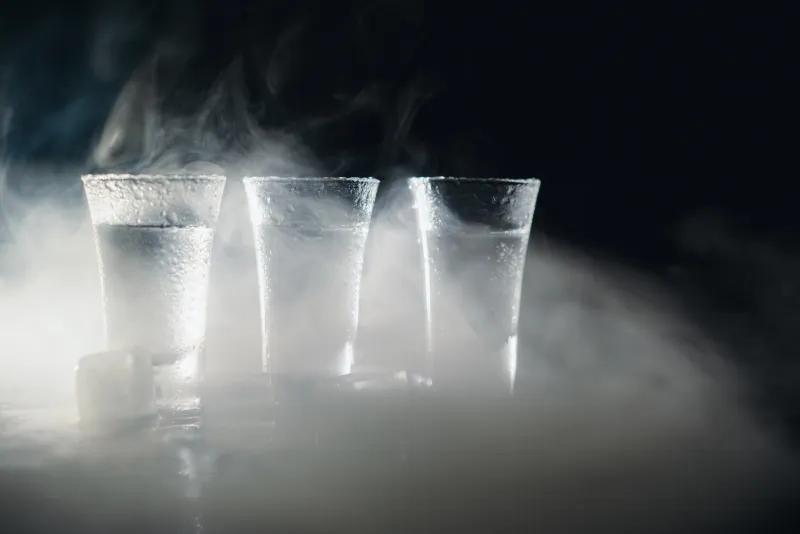
Photo: premium vodka glass at different temperatures frost condensation tasting flight, via nemiroff.vodka
For decades, American vodka culture has operated on a single commandment: serve it frozen. But the craft distillers reshaping the American spirits landscape are making a compelling case that temperature is not simply a preference—it is a tasting variable with profound implications for how a premium vodka reveals itself. What emerges from their cellars and tasting rooms challenges everything the conventional bar cart assumes.
The Freeze Convention and Its Origins
The practice of storing vodka in the freezer is deeply embedded in American drinking culture, and its logic is not without merit. Cold temperatures suppress volatility, reducing the perception of alcohol burn and producing a viscous, almost silky texture that many drinkers find appealing. For mass-market vodkas—products engineered for consistent, inoffensive performance—the freezer is a sensible strategy. Cold masks imperfections efficiently.
But that same masking effect, so useful for hiding the rough edges of a commodity spirit, also suppresses the nuanced qualities that a craft distiller has worked painstakingly to develop. Serving a carefully produced, terroir-expressive vodka at sub-zero temperatures is, in the estimation of many American craft producers, roughly analogous to drinking a fine Burgundy at room temperature during a heat wave: technically consumable, but fundamentally at odds with the spirit's potential.
What Temperature Does to the Palate
The science here is accessible and worth understanding. Aroma compounds—the volatile molecules responsible for a spirit's nose and much of its perceived flavor—are significantly suppressed at low temperatures. Cold slows molecular activity, reducing the rate at which aromatic compounds evaporate from the liquid and reach the olfactory receptors. This is why a frozen vodka can smell like almost nothing, even when it carries genuine aromatic complexity at a warmer serving point.
Viscosity, meanwhile, increases as temperature drops. This is the "silky" quality that cold-vodka advocates often cite, and it is a legitimate sensory pleasure. However, viscosity and mouthfeel are not the same thing. A truly premium vodka, served at a slightly warmer temperature, delivers a textural richness that emerges from its own production qualities—not from the physics of cold liquid. The distinction matters to anyone who wants to understand what they are actually drinking.
Finish length is similarly temperature-dependent. Aromatic compounds that linger on the palate after swallowing require warmth to remain active. At freezer temperatures, finishes tend to be short and clean. At cellar or room temperature, those same vodkas can exhibit a surprising persistence—sometimes floral, sometimes mineral, occasionally reminiscent of the grain from which the spirit was produced.
A Practical Temperature Framework
Craft distillers and experienced bartenders increasingly speak of vodka in terms of temperature "registers," each suited to different contexts and cocktail applications. The following framework reflects both established practice and the evolving thinking coming out of American craft distilleries.
Sub-Zero (Below 32°F): The Classic Frozen Pour
At this register, vodka is at its most viscous and its least aromatic. This is the appropriate choice for a well-made martini where the spirit is intended to provide structure and texture without competing with a delicate vermouth. It is also suitable for shots consumed for their own sake—the cold delivery is part of the ritual. For a premium craft vodka, however, this temperature range is best reserved for occasions where texture is the primary objective.
Chilled (35–45°F): The Refrigerator Range
This is, arguably, the most versatile temperature range for premium vodka. Cold enough to maintain pleasant viscosity, warm enough to allow a portion of the spirit's aromatic profile to express itself. A craft vodka served at refrigerator temperature in a clean, stemmed glass will often surprise first-time tasters with its complexity. This range is ideal for vodka served neat as an aperitif, for exploring a new bottle, or for cocktails where the vodka's character is intended to contribute meaningfully—a Moscow Mule with a well-made ginger beer, for instance, or a Vodka Soda where quality is the point.
Cool Room Temperature (55–65°F): The Cellar Register
This is where craft vodka becomes genuinely revelatory for the curious drinker. At this temperature, the full aromatic profile opens. Wheat vodkas reveal their soft, bready warmth. Rye-based spirits show their subtle spice. Potato vodkas express an earthy, almost savory depth that disappears entirely when frozen. Several American craft producers—particularly those operating out of the Pacific Northwest and the upper Midwest—actively recommend this serving temperature for their flagship expressions, presenting their vodkas in the same context one might approach a fine eau-de-vie or a delicate unaged whiskey.
Room Temperature (65–72°F): The Sipping Register
This is the frontier. Room-temperature vodka is not a mainstream American proposition, and it demands a spirit of genuine quality to succeed. At full ambient temperature, any remaining harshness in a lesser vodka becomes immediately apparent. But a masterfully distilled craft vodka at room temperature can be a quietly extraordinary experience—clean, round, and possessed of a finish that develops over several seconds. This register is best suited to contemplative, single-spirit occasions rather than mixed cocktail service.
Distillery Perspectives: Rethinking the Ice Box
Several prominent American craft distillers have begun incorporating temperature guidance directly into their tasting room experiences. Rather than presenting their vodkas exclusively over ice, they offer side-by-side pours at different temperatures, allowing visitors to experience the same spirit across its full expressive range. The response, by most accounts, is one of genuine surprise—not that the vodka tastes different, but that it tastes like something when the freeze convention is set aside.
This approach reflects a broader maturation in American craft spirits culture. As consumers grow more sophisticated and more willing to engage with vodka on the same terms they apply to whiskey or wine, the frozen-by-default assumption is giving way to a more thoughtful, occasion-driven approach to service.
A Simple Methodology for Home Exploration
For those inclined to conduct their own temperature experiments, the process is straightforward. Select a premium craft vodka with documented base-material character. Pour identical measures into three glasses: one retrieved directly from the freezer, one from the refrigerator, and one left at room temperature for thirty minutes. Nose each glass before tasting. Note the differences in aroma intensity, texture on the palate, and finish length. The results, for most tasters, are persuasive.
The freezer will always have its place. But the most interesting conversation a premium craft vodka can have with the person holding the glass begins at a temperature where the spirit is free to speak.