Unearthing the Archive: How Craft Distillers Are Reviving Vodka's Forgotten Pre-Prohibition Identity

Photo: vintage 1920s bar cocktail recipe book antique spirits bottles, via i.etsystatic.com
There is a particular kind of satisfaction in recovering something that was never truly lost—only buried. For students of American cocktail history, the early twentieth century represents a golden period of experimentation, one in which the bar was a genuine laboratory and the spirits poured across its surface were chosen with deliberate care. Vodka, contrary to the popular narrative that frames it as a postwar import, had already established a quiet but meaningful presence in that era. And now, nearly a century after Prohibition dismantled the culture that sustained it, craft distillers and archival bartenders are working to restore what was forgotten.
A History Obscured by Legislation
The standard telling of American cocktail history tends to position vodka as a mid-twentieth century phenomenon—a Cold War-era spirit that arrived via Soviet mystique and was propelled to dominance by clever marketing. That narrative, while not entirely inaccurate, omits a more nuanced early chapter. Pre-Prohibition bar manuals, some now held in university collections and rare book archives, contain vodka-based preparations that demonstrate a far older sophistication than the conventional story allows.
The Volstead Act of 1919 did not merely prohibit the sale of alcohol—it obliterated institutional memory. Distilleries shuttered. Bartenders emigrated. Recipe books were discarded or destroyed. When repeal came in 1933, the reconstruction of American cocktail culture drew heavily on what had survived: gin, whiskey, and rum had robust commercial infrastructures that recovered quickly. Vodka, lacking the same industrial momentum in the American market, was effectively reintroduced as something new rather than something restored.
The result was a clean break with a history that had barely had time to establish itself.
Archival Research as a Craft Practice
What distinguishes the current revival from earlier waves of cocktail nostalgia is its methodological rigor. Bartenders and distillers are not simply romanticizing the past—they are conducting genuine historical research. Organizations such as the Museum of the American Cocktail in New Orleans and the Wondrich Collection at the Cocktail Kingdom Library in New York have become resources for professionals seeking primary sources.
Pre-Prohibition recipe compendiums—among them Hugo Ensslin's Recipes for Mixed Drinks (1916) and the various editions of Jerry Thomas's Bar-Tenders Guide—contain preparations in which neutral grain spirits functioned as the structural backbone of complex compositions. While these recipes did not always specify the spirit by name, contemporary researchers have argued persuasively that the "rectified spirits" and "grain spirits" referenced in period texts were functionally equivalent to what we now classify as vodka.
The implications for modern craft producers are significant. If premium vodka was, in fact, the original choice of the discerning drinker rather than a compromise solution, then the entire modern marketing frame—which so often positions vodka as a blank canvas for masking lesser ingredients—requires reconsideration.
What Period Recipes Actually Reveal
Adapting archival recipes for the contemporary palate is both an art and a discipline. The challenge lies not in recreating the original flavor profile exactly, but in honoring its structural logic while acknowledging that ingredient quality has changed substantially over a hundred years.
Consider the Knickerbocker, a preparation documented in multiple pre-Prohibition sources that combines a neutral spirit base with raspberry syrup, citrus, and a float of aged rum. In its original form, the neutral spirit was likely chosen for its clarity and its ability to carry the fruit elements without competing with them. A modern craft vodka—particularly one distilled from a single grain source with careful attention to the distillation cut—performs this function with greater precision than its historical counterpart could have achieved with the technology then available.
Similarly, the Vesper's spiritual ancestors—preparations combining neutral grain spirits with fortified wines and citrus bitters—appear in pre-Prohibition literature with a frequency that suggests they were not novelties but established categories. Craft distillers who have experimented with these preparations report that the results are markedly different when a high-quality American vodka replaces the generic "white spirit" called for in the original text. The cocktail gains structure. The bitters register more clearly. The overall composition achieves a balance that cheaper spirits obscure.
The Distiller's Role in Restoration
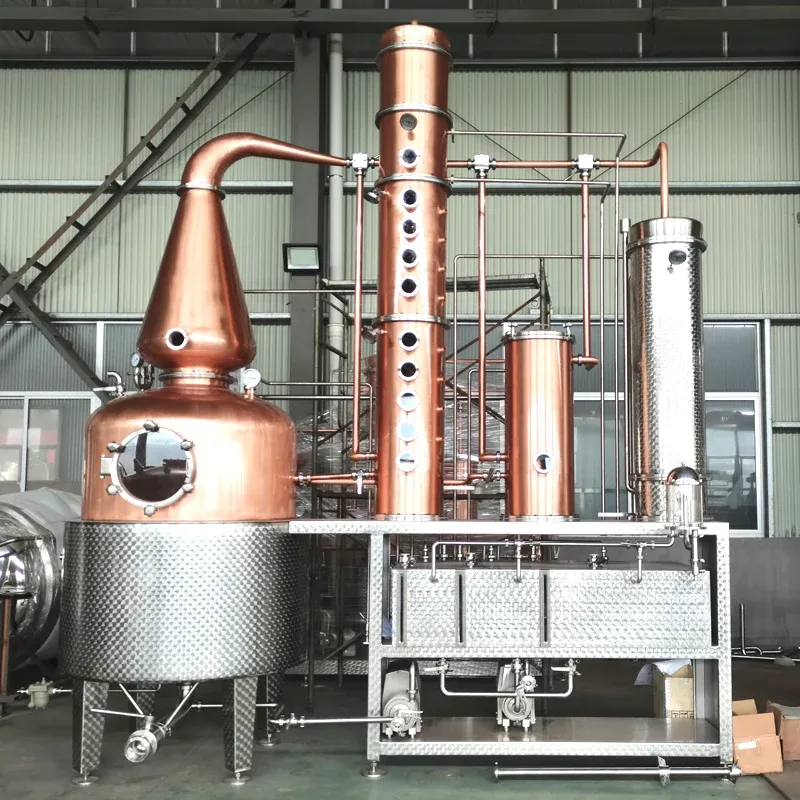
Several American craft distilleries have moved beyond passive interest in cocktail history to become active participants in the revival. In collaboration with bartenders and culinary historians, these producers are developing expressions specifically calibrated to perform well in period preparations—attending to factors such as mouthfeel, dilution behavior, and the interaction of residual congeners with historical bitters formulations.
This kind of intentional production represents a meaningful departure from the volume-focused model that dominated American vodka manufacturing for decades. When a distiller considers how a spirit will behave when combined with a 1910s-era raspberry shrub, they are making decisions at the still that cascade all the way to the finished glass. The choice of base grain, the number of distillation passes, the filtration intensity—each variable matters in a way that purely neutral production would not require.
The conversation between distiller and bartender that this process demands is itself a form of craft. It restores a collaborative relationship that Prohibition severed and that the postwar spirits industry never fully reconstructed.
Drinking History Responsibly
There is, of course, a risk in any historical revival: the temptation to fetishize the past rather than learn from it. The goal of restoring pre-Prohibition vodka cocktails is not to produce museum pieces but to recover a vocabulary—a set of structural principles that expand the contemporary bartender's range.
When a home enthusiast or professional bartender reaches for a craft vodka to build a Knickerbocker or a period-inspired citrus preparation, they are participating in something larger than nostalgia. They are asserting that premium vodka has always deserved a seat at the serious cocktail table—and that the evidence, buried in archives and recipe books for a century, was waiting to confirm exactly that.
The archive, it turns out, is not a repository of the obsolete. It is a blueprint for what was always possible.