No Mixer Required: The Art of Drinking Premium Craft Vodka Straight
For decades, American drinking culture treated vodka as a background player—a colorless, odorless utility spirit whose primary virtue was its willingness to disappear into whatever surrounded it. Order a vodka at most bars and the bartender's first instinct was to reach for something else: tonic, soda, cranberry juice, or a shaker full of citrus. The spirit itself was almost beside the point.
That assumption is now being quietly but decisively dismantled.
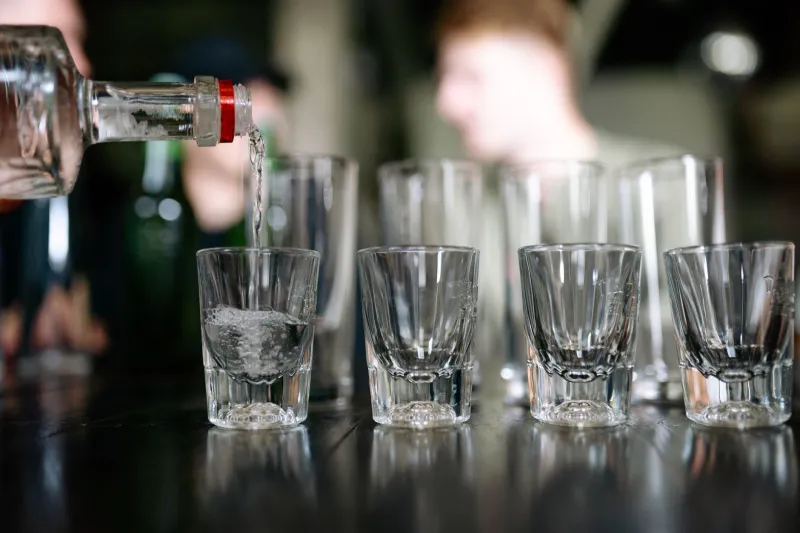
Across the country, a growing cohort of spirits enthusiasts is pouring craft vodka into a glass, adding nothing, and drinking it with the same focused attention they might give a fine Scotch or an aged Calvados. They are discovering that the best American craft vodkas have never needed a chaser. They have simply been waiting for drinkers willing to listen.
The Connoisseur's Provocation
There is a useful provocation that serious vodka producers have long employed with skeptical visitors to their distilleries: hand them a small pour of the house spirit, neat, at room temperature, and ask them to describe what they taste. The exercise tends to silence the assumption that premium vodka is defined by an absence of flavor.
What tasters typically encounter instead is a spectrum of sensation—a whisper of sweet grain, a mineral coolness on the mid-palate, a finish that lingers with unexpected delicacy. These are not the characteristics of a spirit engineered to vanish. They are the hallmarks of a vodka crafted with enough intention and restraint to reward undivided attention.
The distinction between commodity vodka and craft vodka has never been more legible than it is in the neat glass. Strip away the Kahlúa, the elderflower liqueur, the muddled cucumber, and what remains is either a spirit of genuine character or simply the memory of one.
What Craft Distillers Are Building
The craft distilling movement in the United States has spent the better part of two decades arguing—through its products, its sourcing decisions, and its production methods—that vodka deserves to be taken seriously as a standalone spirit. The argument is now reaching its logical conclusion.
Distilleries working with heritage grains, single-source potatoes, or locally harvested botanicals are making deliberate choices at every stage of production that accumulate into something unmistakable in the glass. The base ingredient matters enormously when there is nothing else in the pour to obscure it. A vodka distilled from organic hard red winter wheat grown in the high plains of Montana carries a different energy than one made from Midwest corn or Pacific Northwest rye—and that difference, subtle but real, is precisely what the neat pour reveals.
Distillation philosophy matters equally. Producers who favor fewer passes through the still, preserving trace congeners that would otherwise be stripped away, are making a conscious wager that complexity is an asset rather than an impurity. The result is a vodka that behaves more like a finely tuned single malt than a neutral grain spirit—one that opens up in the glass, shifts across the palate, and finishes with something worth contemplating.
Temperature as a Tool
One of the practical refinements that distinguishes the serious neat vodka drinker is an attention to temperature. The conventional wisdom—freeze your vodka, serve it ice-cold—produces a spirit that is smooth in the most reductive sense: numbed, sealed, its aromatic compounds locked beneath the surface. It is pleasant, certainly, but it is not particularly revealing.
Many craft producers and the bartenders who champion their work now advocate for a different approach. A premium vodka served slightly chilled, or even at cool room temperature, allows its aromatic architecture to become accessible. The nose opens. The texture—whether silky, viscous, or lean and precise—becomes fully apparent on the tongue. The finish, which in a well-made vodka can extend for a surprising number of seconds, has room to develop.
For those who prefer the on-the-rocks experience, a single large-format ice cube offers a middle path: gradual, controlled dilution that coaxes the spirit open without overwhelming it. The choice of vessel matters as well. A tulip-shaped glass, similar to those used for Scotch nosing, concentrates the aromatics in a way that a standard rocks glass does not, making the experience considerably more informative.
The Cultural Shift Behind the Trend
The neat vodka moment does not exist in isolation. It is part of a broader recalibration of American drinking culture—one that prizes intentionality, provenance, and craft over volume and novelty. The same sensibility that has driven consumers toward single-origin coffee, natural wine, and small-batch whiskey is now finding its way to vodka, the last major spirits category to receive that kind of sustained critical attention.
Sommeliers and beverage directors at some of the country's most respected restaurants have begun treating premium craft vodkas with the same curatorial seriousness they apply to their whiskey and mezcal lists. Tasting menus occasionally feature vodka pairings—a development that would have seemed eccentric a decade ago and now reads as simply logical. If the spirit has enough to say, it earns its place at the table.
Social media has played a role as well, though perhaps not in the way one might expect. The communities that have formed around serious spirits appreciation—on platforms and in private groups, in enthusiast forums and local tasting clubs—have begun to treat the neat vodka pour as a kind of credentialing exercise. To appreciate vodka without assistance, to find the vocabulary for what is actually in the glass, is to demonstrate a level of palate education that commands respect.
The Ultimate Measure of Quality
There is a reason that the most confident craft vodka producers invite visitors to taste their product straight, without ceremony or accompaniment. The neat pour is the most honest assessment a vodka can face. Every decision made in the distillery—the grain selection, the water source, the number of distillation runs, the choice to filter or not—is present in that unmediated sip. There is nowhere to hide and nothing to compensate for a shortcoming.
For the discerning drinker, this transparency is precisely the point. The neat glass is not a rejection of cocktail culture—it is a complement to it, a way of understanding what a spirit is capable of before exploring what it can become in combination with other ingredients. The bartender who has tasted a vodka straight, who knows its weight and its tendencies and its finish, is a more informed collaborator when the shaker comes out.
But increasingly, the shaker stays on the shelf. The glass is poured. And the vodka—unhurried, unadorned, and entirely itself—is given the floor.