Breaking the Martini Formula: Why Craft Vodka Rewrites the Rules of Ratio
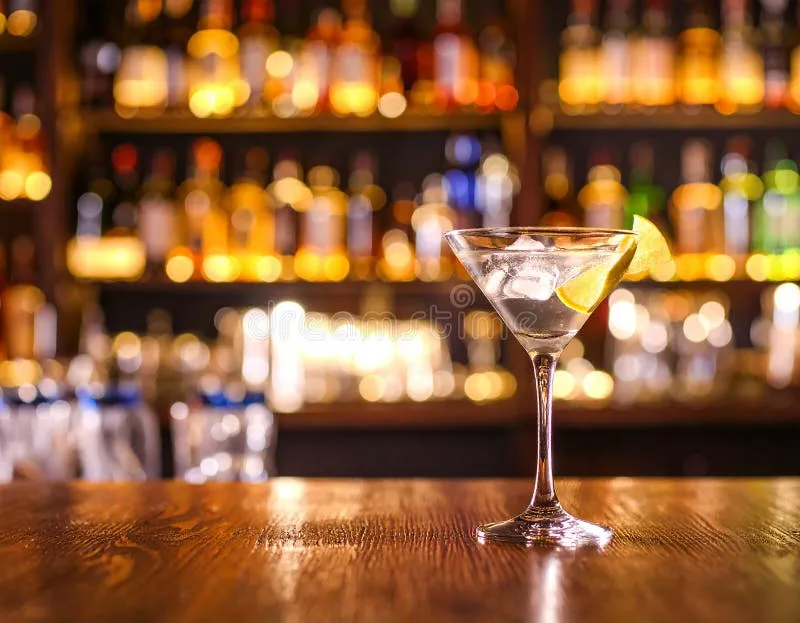
Photo: craft vodka martini glass close up elegant bar, via thumbs.dreamstime.com
There is a particular confidence that comes with ordering a vodka martini. The request implies a certain fluency — a familiarity with ratios, with temperature, with the careful choreography of spirits and vermouth. And yet, for all its apparent simplicity, the vodka martini conceals a paradox that most drinkers never pause to consider: the quality of the vodka changes everything.
Not merely in the way that better ingredients yield better results. More fundamentally than that. When a craft vodka enters the equation — one with genuine texture, a defined character, and a production history worth understanding — the traditional formula begins to feel less like a rule and more like a starting point.
The Standard Formula and Its Assumptions
The conventional vodka martini ratio — typically cited as somewhere between 4:1 and 6:1, spirit to vermouth — was not handed down from some Platonic ideal of cocktail perfection. It evolved in response to the spirits most commonly available: clean, neutral, mass-produced vodkas designed to disappear into whatever surrounded them. When the spirit has no discernible personality of its own, the vermouth carries the weight of flavor. The dilution from stirring becomes essential to softening an otherwise sharp, featureless alcohol.
This is not a criticism of those spirits. They serve a purpose. But it does mean that the formula was built around an absence — around vodka defined by what it lacks rather than what it offers.
Craft vodka operates from an entirely different premise.
What Changes When the Vodka Has Something to Say
Jeremy Kasner, a bar director based in Chicago who has spent more than a decade working with American craft spirits, describes the shift plainly. "When I'm working with a well-made small-batch vodka — something with real mouthfeel, maybe a subtle sweetness from the grain, or a mineral note from the water source — I immediately start thinking about vermouth differently. I'm no longer trying to add character. I'm trying to complement it."
This distinction matters enormously in practice. A craft vodka with a pronounced cereal quality, for instance, may find its natural counterpart in a dry vermouth with herbal complexity. The ratio might tighten to 3:1, allowing the vermouth to participate as a genuine partner rather than a faint background presence. Conversely, a vodka with a long, silky finish and restrained minerality may need almost no vermouth at all — the spirit is doing enough work on its own.
Cocktail educator and author Simone Hartwell, who conducts tasting workshops across the Pacific Northwest, has formalized this observation into what she calls the "character test." Before building any martini, she evaluates the vodka neat: its viscosity, its aromatics, its finish. "If I can describe the vodka in three distinct terms — not just 'clean' or 'smooth,' but something more specific — then I know I need to rethink the standard ratio. The spirit is telling me it has opinions."
Dilution: The Variable No One Discusses
Beyond vermouth, dilution is perhaps the most underappreciated element in martini construction, and it is the variable most dramatically affected by vodka quality.
Mass-market vodkas are typically distilled to a point that prioritizes uniformity over texture. The result is a spirit that benefits from the water added during stirring — it rounds off edges, lowers the perceived heat, and creates a more palatable final product. Standard stirring time of approximately 30 seconds in ice is calibrated, consciously or not, for this kind of spirit.
Craft vodkas, particularly those filtered through unconventional media or rested in ways that develop additional texture, often require less dilution. Over-stirring a premium vodka martini risks washing away precisely the qualities that make the spirit worth using. Several bartenders consulted for this piece noted that they reduce their stirring time by as much as 30 percent when working with high-quality small-batch vodka — and that the difference in the finished drink is immediately perceptible.
"You're essentially trying to chill the cocktail without erasing it," says Kasner. "That's a different skill set than most people practice."
Temperature, Glassware, and the Question of Garnish
The craft vodka martini conversation does not end with ratio and dilution. Temperature management — pre-chilling the glass, the starting temperature of the spirit, even the age of the ice — takes on heightened importance when the vodka itself is the point.
Garnish, too, becomes a more deliberate choice. The classic olive introduces salt and brine, which can overwhelm a delicate craft spirit. A lemon twist, expressing its oils across the surface of the drink, may be a more respectful accompaniment to a vodka with floral or citrus-forward notes. Some bartenders are now offering garnish recommendations alongside spirit selections, treating the two as inseparable decisions.
Practical Guidance for the Home Mixologist
For those building martinis at home with quality craft vodka, the following principles offer a useful foundation:
Start with less vermouth, then add. Rather than committing to a ratio upfront, begin with a smaller pour of vermouth and taste as you build. The craft vodka may need less support than you expect.
Evaluate the vodka neat first. Spend two minutes with the spirit before it enters the mixing glass. Note its texture, its finish, any aromatic qualities. These observations should directly inform your construction.
Err toward under-stirring. Chill is necessary; dilution is optional. Ten to fifteen seconds less stirring than you might otherwise use is a reasonable starting point with a high-quality spirit.
Match the garnish to the spirit's character. A clean, mineral-forward vodka may welcome a twist. A richer, grain-forward expression might pair more naturally with a single, quality olive.
The Paradox Resolved
The vodka martini paradox is, in the end, not really a paradox at all. It is simply the recognition that a formula designed for a neutral spirit cannot serve as the universal template for every spirit that happens to be clear. Craft vodka, at its best, brings something to the glass — and that something deserves a response.
The perfect martini ratio, it turns out, is not a number. It is a conversation between the bartender and the spirit. Premium craft vodka simply makes that conversation worth having.