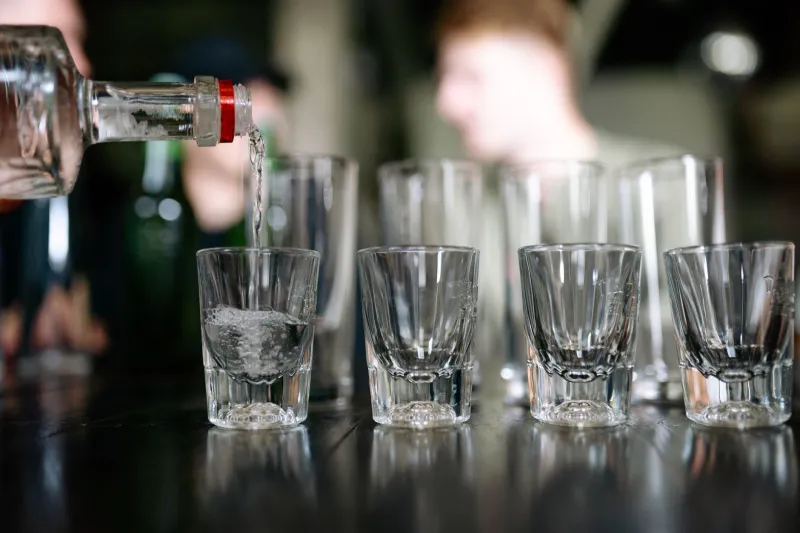
Uncut and Uncompromised: The Case for Serving Premium Vodka Without Ice
There is a particular moment in a well-run cocktail bar when a guest orders a premium craft vodka and the bartender, rather than reaching for the ice scoop, pauses and asks a quiet question: Would you like to try it neat? For many Americans, that question still registers as unusual—even mildly provocative. Vodka, after all, has been marketed for decades as a spirit best served as cold as possible, its identity defined by frost, dilution, and the gentle numbing of the palate. But something is shifting. Across the country, in establishments that take craft spirits as seriously as a sommelier takes a first-growth Bordeaux, bartenders are deliberately removing ice from the equation—and inviting their guests to taste what has been hiding beneath it.
The Chill That Conceals
The prevailing assumption about vodka temperature is rooted in a misunderstanding of what cold actually does to a spirit. While low temperatures suppress certain harsh alcoholic notes—a genuine virtue when the spirit in question is of middling quality—they also suppress virtually everything else. Aroma compounds, which account for the majority of what we perceive as flavor, become significantly less volatile as temperature drops. A vodka served at or near freezing offers the palate almost nothing to work with beyond a clean, neutral burn.
For mass-produced vodkas engineered to be precisely that—clean and neutral—this is not a problem. It is, in fact, the intended outcome. But for a premium craft vodka produced from a specific grain or potato variety, distilled with deliberate restraint, and filtered to preserve character rather than eliminate it, sub-zero service is counterproductive. The nuances that a master distiller spent months cultivating are rendered inert by the very presentation meant to showcase the spirit.
"When a guest drinks a craft vodka at freezing temperatures," says one veteran bar director at a Chicago spirits-focused establishment, "they are essentially drinking the idea of the vodka rather than the vodka itself. The texture flattens, the aromatics disappear, and you lose the entire conversation the distiller was trying to have."
Temperature as a Tasting Tool
The bartenders leading this quiet renaissance are approaching temperature not as an afterthought but as a fundamental variable in the tasting experience—much as a cheesemonger might consider the temperature of a cave-aged wheel before service, or a sommelier the precise degree at which a white Burgundy should be poured.
The emerging consensus among craft-focused practitioners is that premium vodka is best experienced somewhere between 55 and 65 degrees Fahrenheit. At this range, the spirit opens in a manner that colder service entirely prevents. Textural qualities become apparent—the gentle viscosity of a potato-based vodka, the clean, almost silky mouthfeel of a well-crafted wheat expression. Aromatic compounds lift from the surface of the liquid and deliver the kind of layered olfactory experience that most drinkers have never associated with vodka.
This is not a radical proposition within the broader world of spirits appreciation. Whiskey drinkers have long understood that a few degrees of warmth—or a single drop of water—can unlock a dram in ways that chilling would destroy. The craft vodka movement is simply extending that same intellectual courtesy to a spirit that has, until recently, been denied it.
Glassware as a Partner in Revelation
Temperature management is only one element of the neat vodka experience. Glassware, too, plays a role that the industry is only beginning to take seriously. The traditional shot glass, with its wide mouth and minimal surface area, offers no opportunity for aromatic concentration. The standard rocks glass, while comfortable, similarly disperses rather than focuses the spirit's character.
A number of bartenders have begun experimenting with tulip-shaped glassware—forms borrowed from whiskey and cognac service—that narrow toward the rim and allow aromatic compounds to gather before reaching the nose. Others have adopted small-format copita glasses, traditionally associated with sherry and brandy, that fit naturally in the palm and allow gentle warming through contact with the hand.
"The glass is part of the argument," notes a spirits educator based in New York who consults with craft bars on their vodka programs. "When you present a premium vodka in a thoughtful vessel, at a considered temperature, without ice diluting the conversation, you are communicating something to the guest before they take a single sip. You are telling them that this spirit deserves attention."
Education as the Bartender's Primary Obligation
Perhaps the most significant shift driving the neat vodka renaissance is a change in how bartenders conceive of their role. The best craft-focused practitioners no longer see themselves solely as technicians who execute recipes. They are educators—curators of experience whose responsibility extends to reshaping the assumptions guests bring through the door.
This requires a particular kind of confidence. Suggesting that a guest forego ice in a culture that has spent forty years conflating vodka quality with temperature is not a trivial ask. It demands a bartender who can explain, clearly and without condescension, why the adjustment serves the guest's actual interests.
The most effective approach, according to those who practice it regularly, is not to argue against ice but to invite comparison. Pouring a small measure neat alongside a standard chilled pour allows the guest to conduct their own experiment. In most cases, the neat expression speaks for itself—and once a guest has tasted the difference, the conversation about craft vodka changes permanently.
What the Ice Was Hiding
For those who have made the transition, the neat pour reveals a category that many assumed was defined by its absence of character. Craft vodkas produced from heritage grains carry genuine cereal notes—a faint breadiness, a suggestion of the field. Those distilled from locally sourced potatoes offer an earthiness and weight that is wholly distinct from grain-based expressions. Fruit-based vodkas, still relatively rare in the American market, carry delicate floral and stone-fruit characteristics that vanish entirely beneath ice.
None of these qualities are loud. Vodka is not whiskey; it does not announce itself. But subtlety, properly presented, is its own form of sophistication—and the bartenders championing the neat pour understand that the spirit's quietness is not a limitation to be overcome with mixers and temperature. It is an invitation to pay closer attention.
At Ten Forward Vodka, we have long held that the most honest measure of a craft spirit is what it offers without embellishment. The neat renaissance is not a trend—it is a correction. And for the discerning drinker willing to set aside the ice bucket, the reward is a category that has been hiding in plain sight.